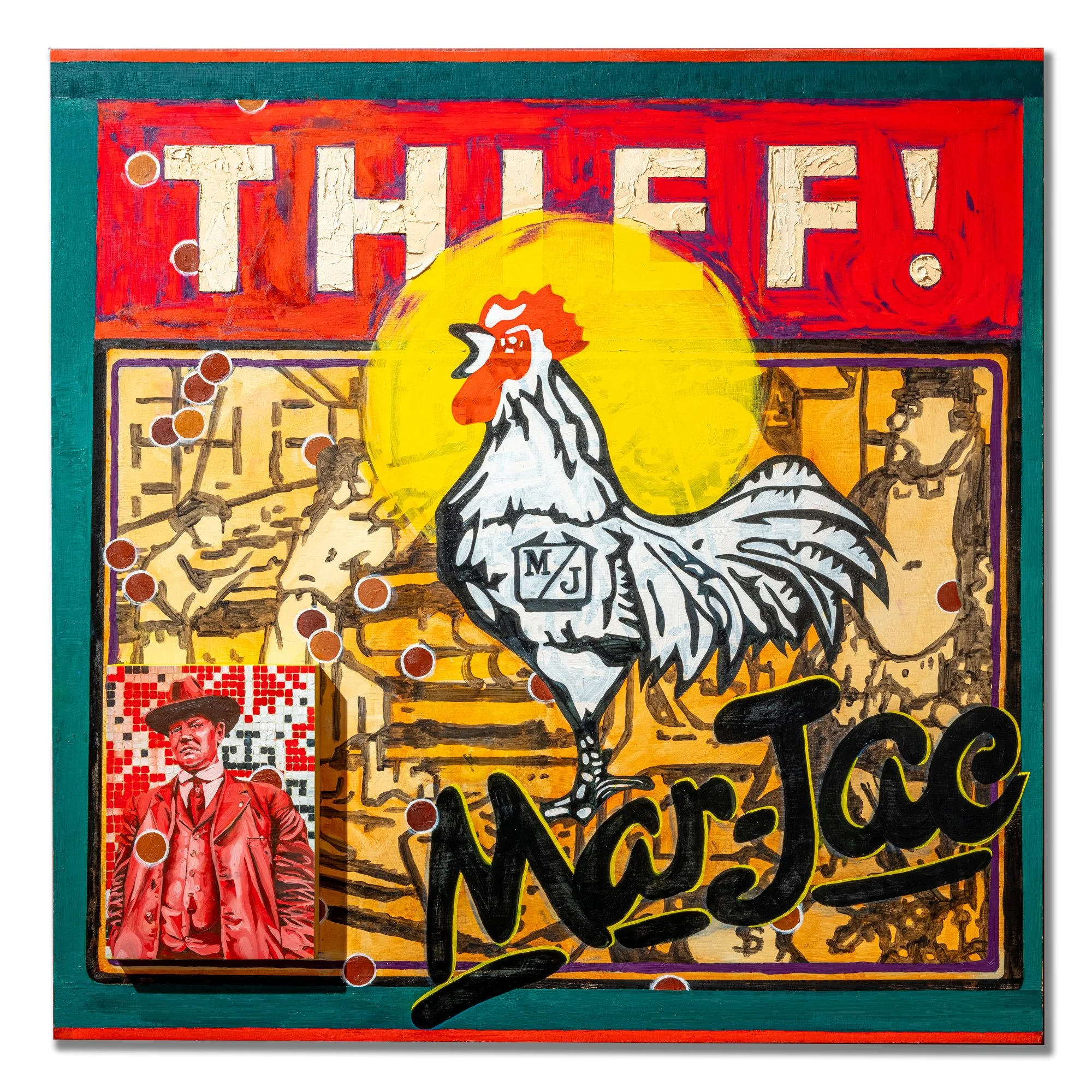
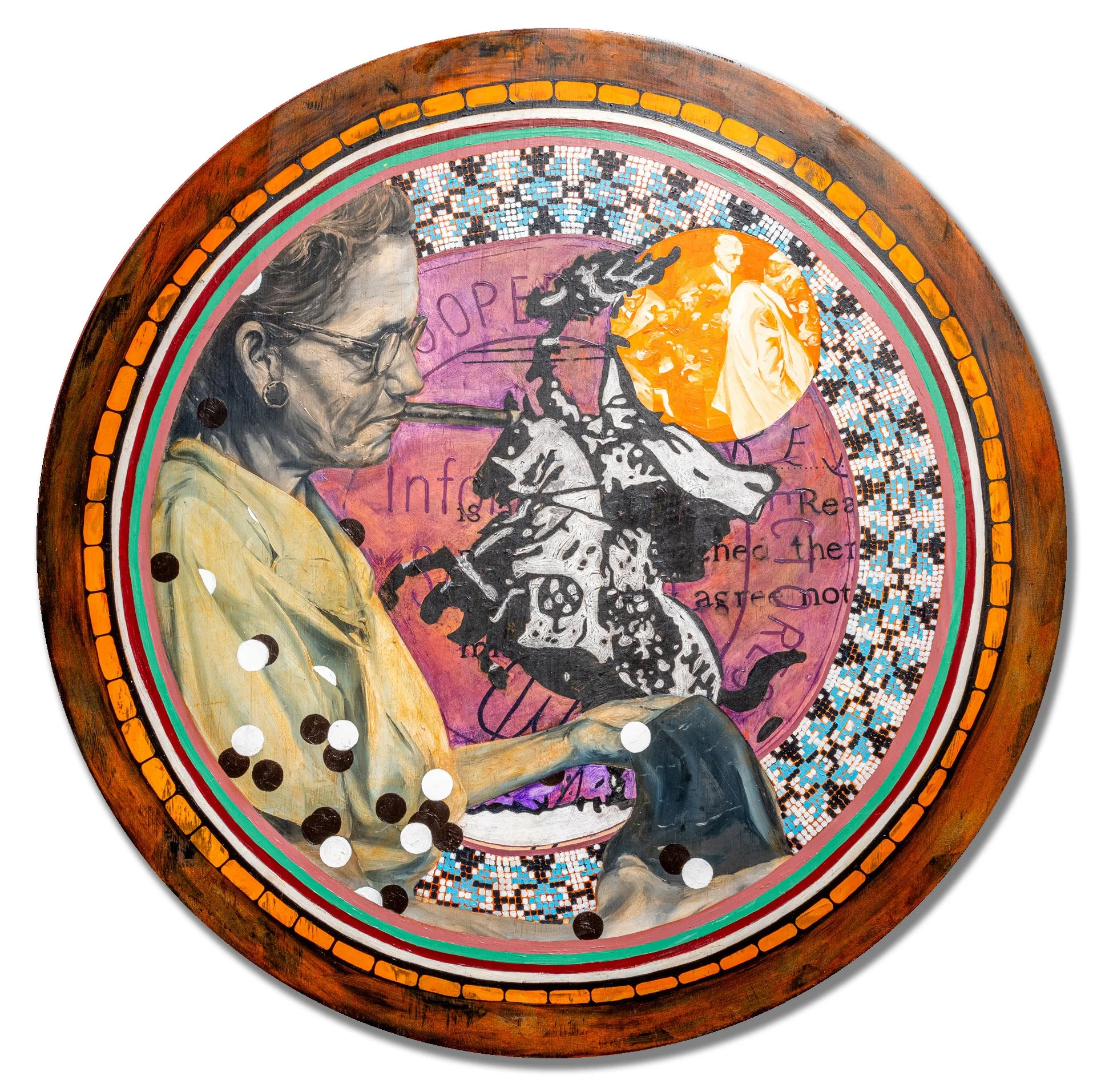


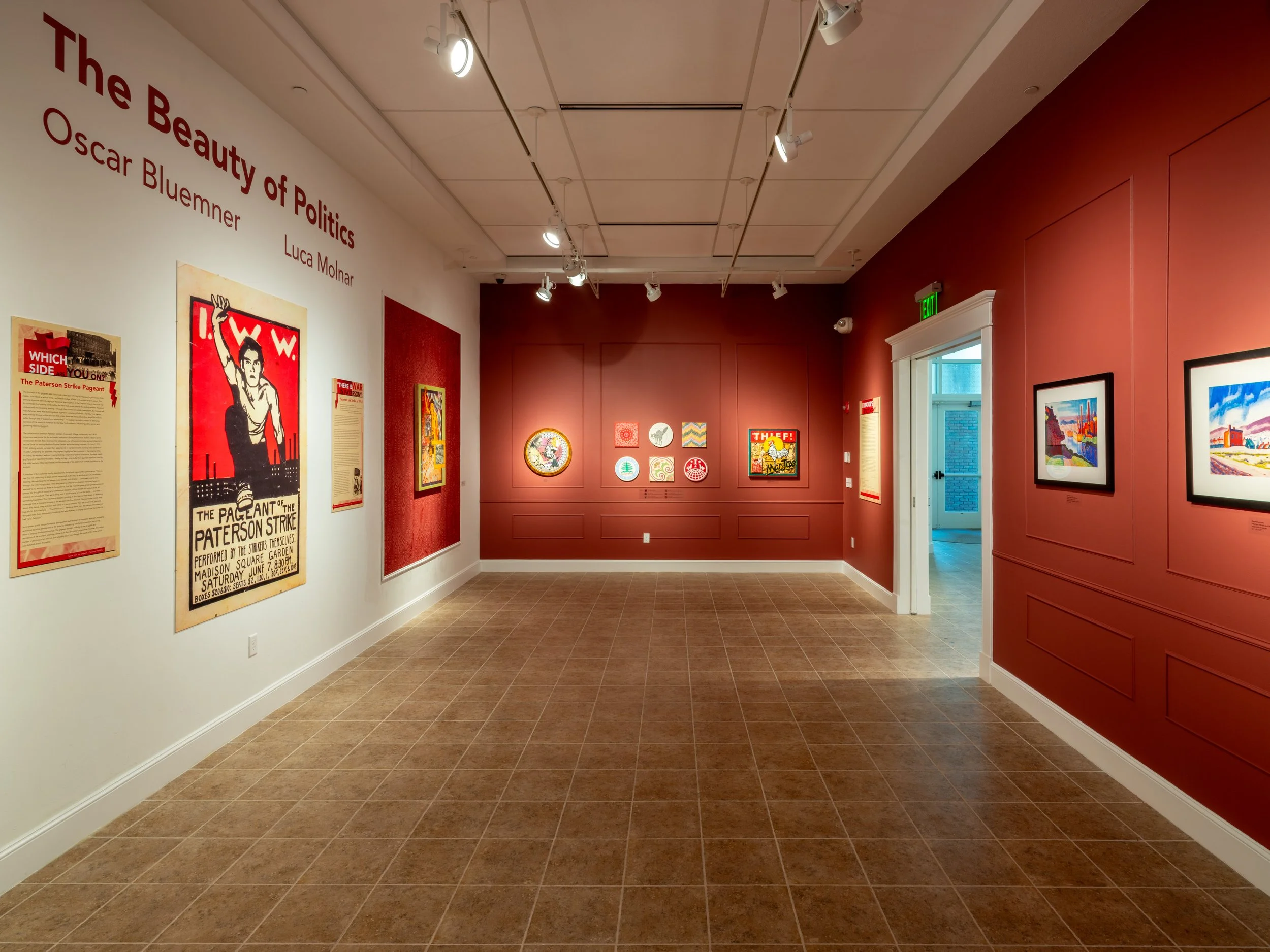
The Beauty of Politics: Oscar Bluemner and Luca Molnar showcases the distinct approaches these artists employ in addressing political issues. This exhibition invites spectators to actively and critically engage with the very concept of political art. By exploring the unique perspectives of both a Modernist and a contemporary artist, the audience is prompted to contemplate the intersection of aesthetics and politics, encouraging reflection on the nuanced connections between artistic expression and the broader socio-political landscape.
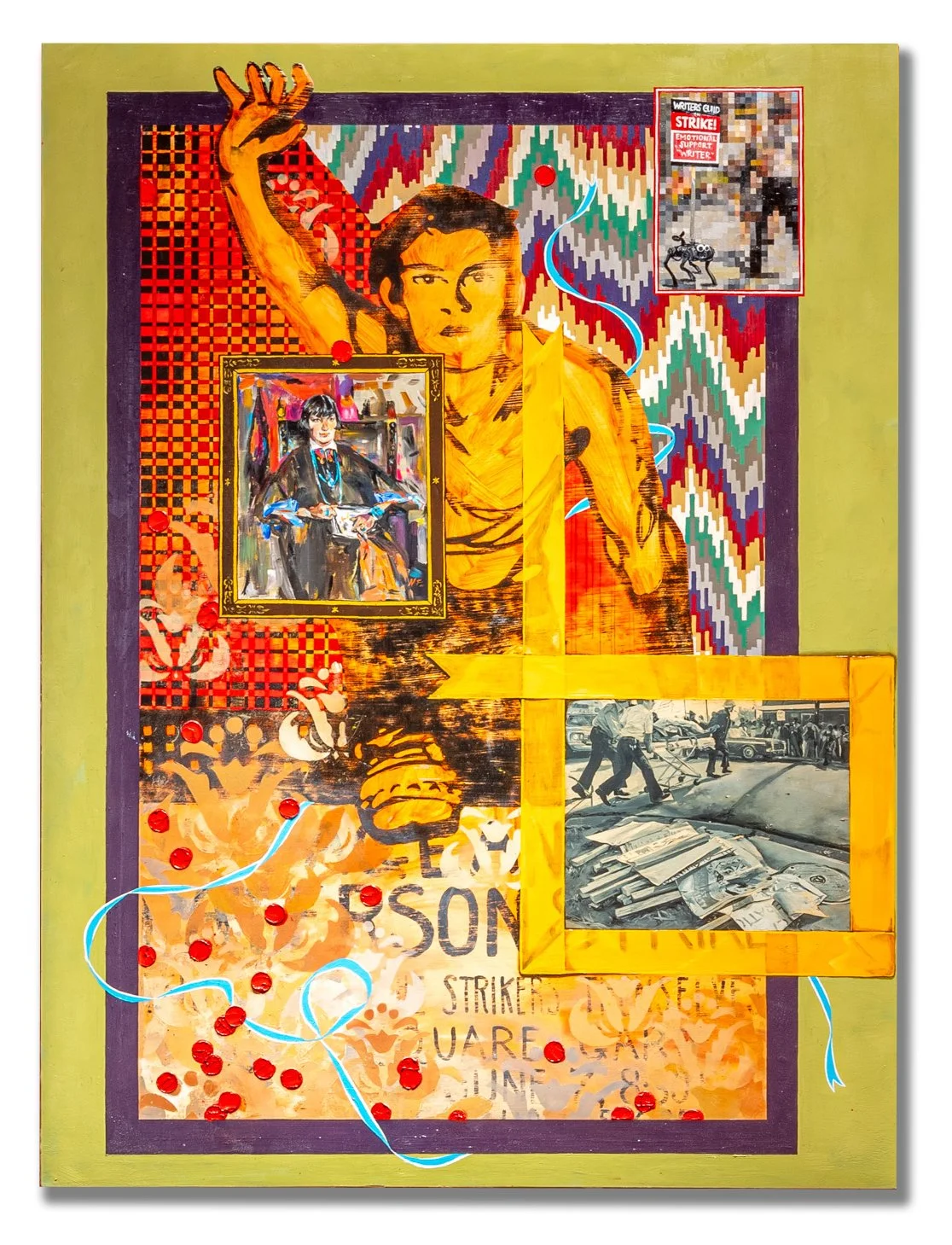
The Paterson Silk Strike of 1913 is chosen as a crucial starting point, not solely because it is directly or indirectly referenced by Bluemner and Molnar, but primarily because this specific episode in the US labor movement epitomizes the convergence of radical politics and art. Robert Edmund Jones' portrayal of a worker, breaking through the constraints of the factory background into the spectator's space, was designed to galvanize the audience, projecting a sense of rebellion and resolve. Positioned on the program cover to advertise the event, this image had to be immediately understood, creating a fitting unity between the picture and the message. Nevertheless, such directness rarely occurs in independent artworks; after all, art should not be synonymous with propaganda. So, what does it mean to create a politically engaged art? Bluemner and Molnar present distinct answers to this question.
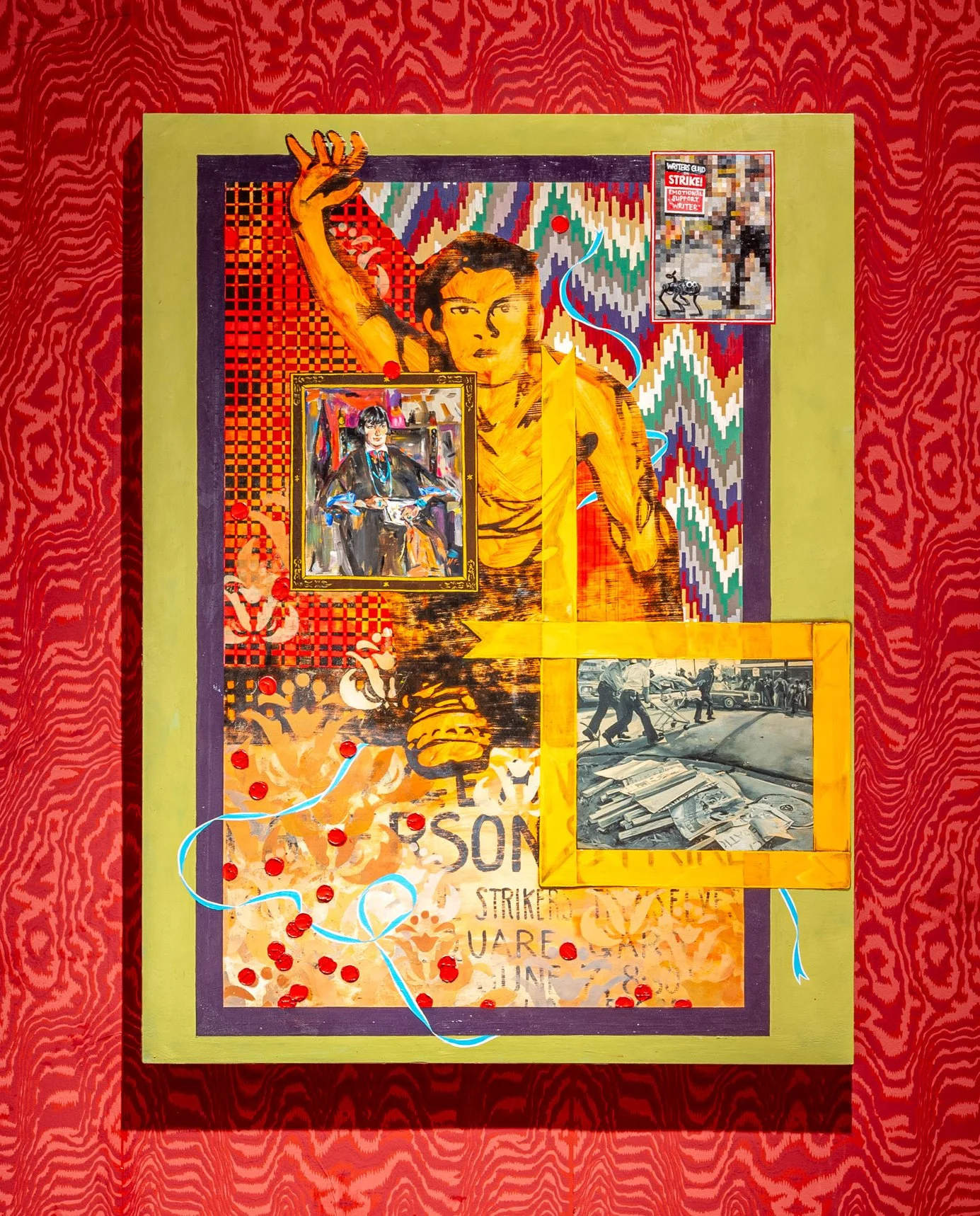
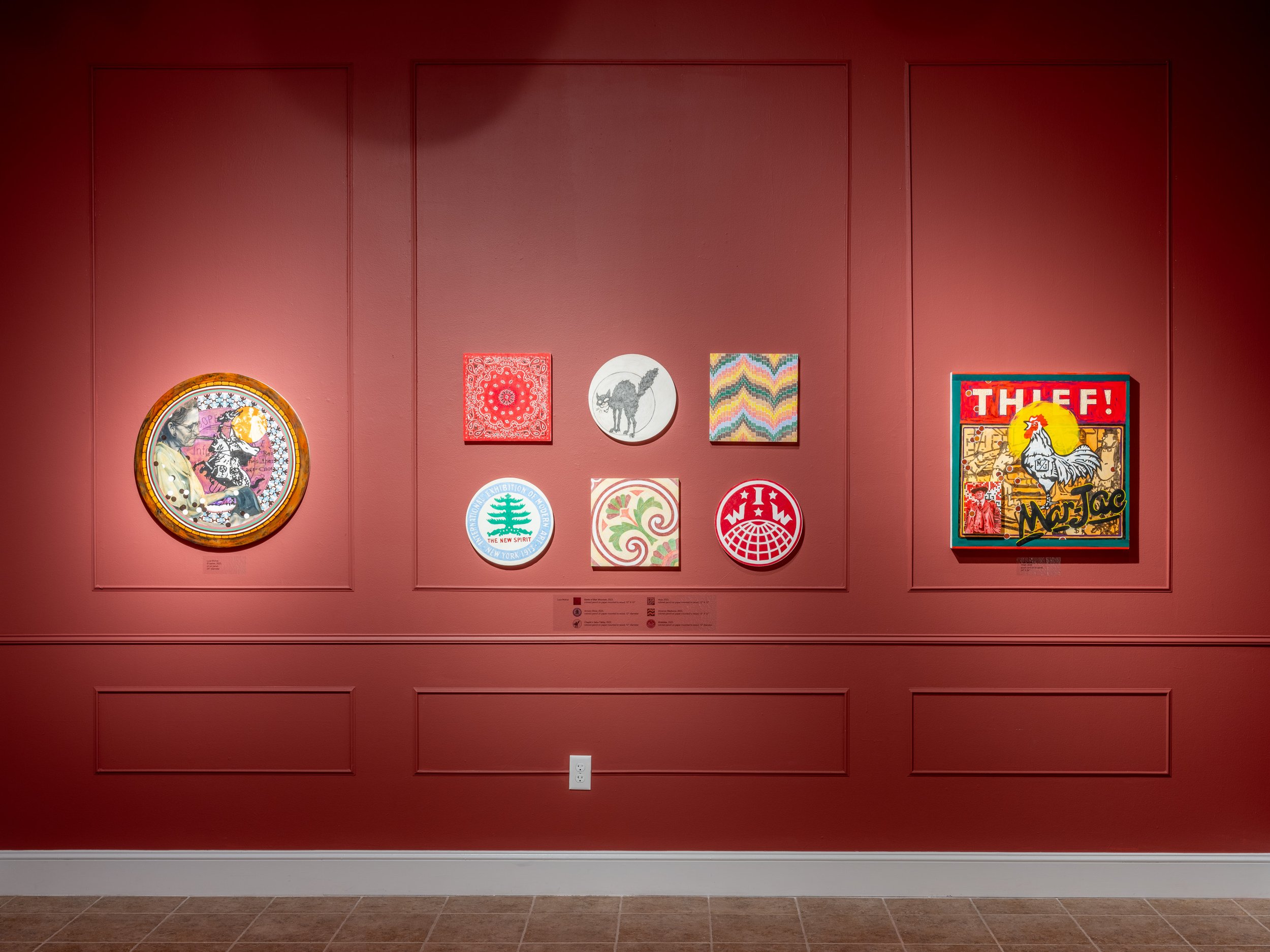
Unlike Bluemner, who never explicitly expressed his political beliefs, Molnar is unapologetically forthright regarding her commitment to social justice. However, oscillating between abstraction in decorative patterns and fragmented figuration, her works invite viewers into a realm of complexity. Instead of providing straightforward answers, they compel spectators to engage in the process of decoding, emphasizing the intricate layers embedded within the art. In other words, the political concerns do not overshadow the aesthetics; rather, the two are in a dynamic dialogue. Molnar’s paintings cannot be reduced to a singular message; the artist draws on a variety of historical and contemporary visual references that resist linear reading. For instance, Hot Strike Summer integrates elements from Jones' Paterson pageant cover (1913), Nicolai Fechin’s 1927 portrait of Mabel Dodge Luhan, who was instrumental in staging the pageant, as well as photographs depicting the aftermath of the Greensboro Massacre (1979) and the picket line during the Writers Guild of America strike (2023). Set against a patterned background, these images may not be immediately recognizable, yet they eloquently recount a sustained narrative of resistance and underscore the significance of solidarity across racial, gender, and class lines. Rather than diluting the potency of the political messages embedded in the works, the decorative patterns enhance their allure, extending an invitation to a diverse audience—beyond just the believers—to join the conversation. This is the essence of what The Beauty of Politics is about.
Curator’s Statement by Dr. Katya Kudryavtseva