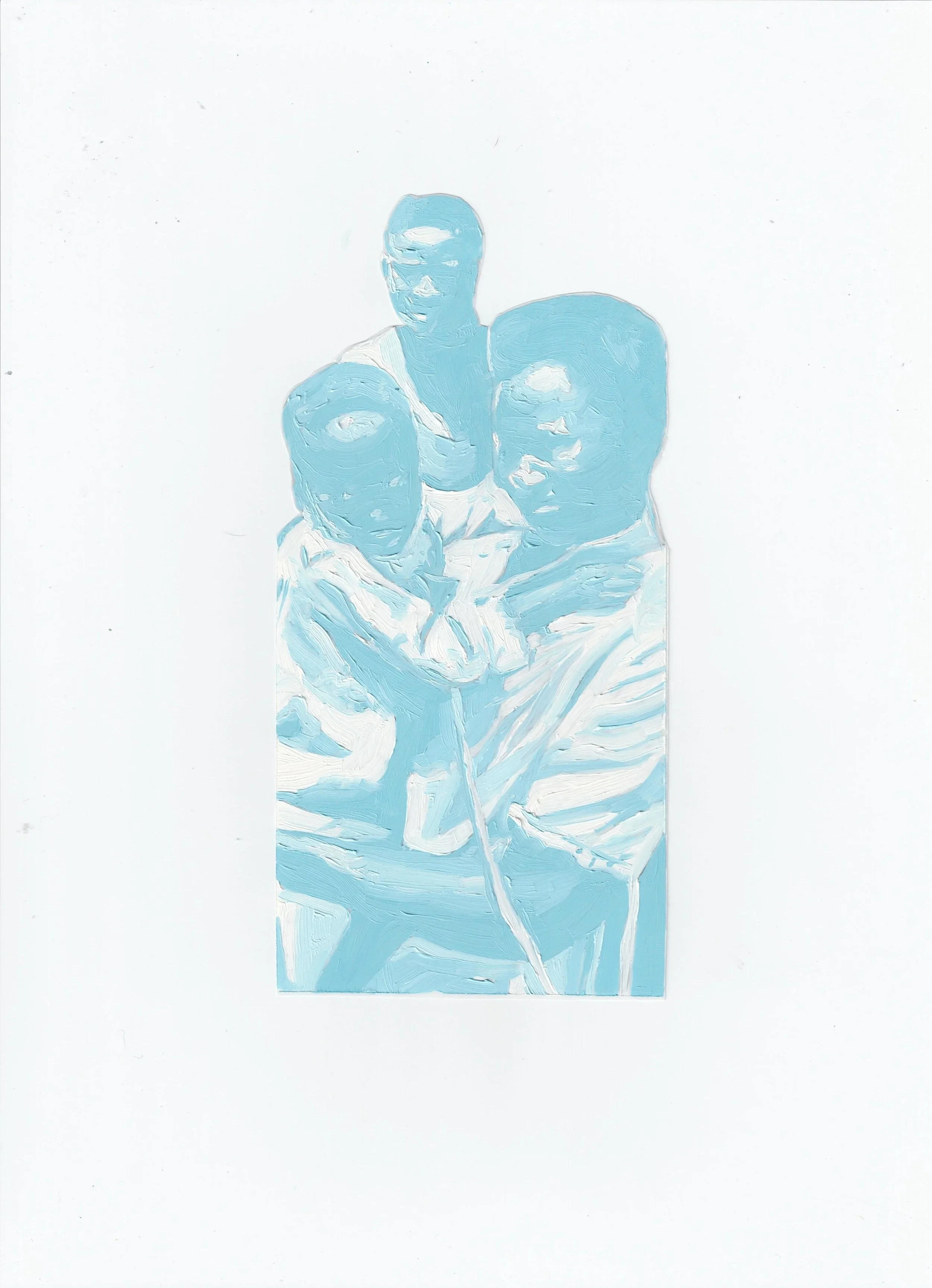
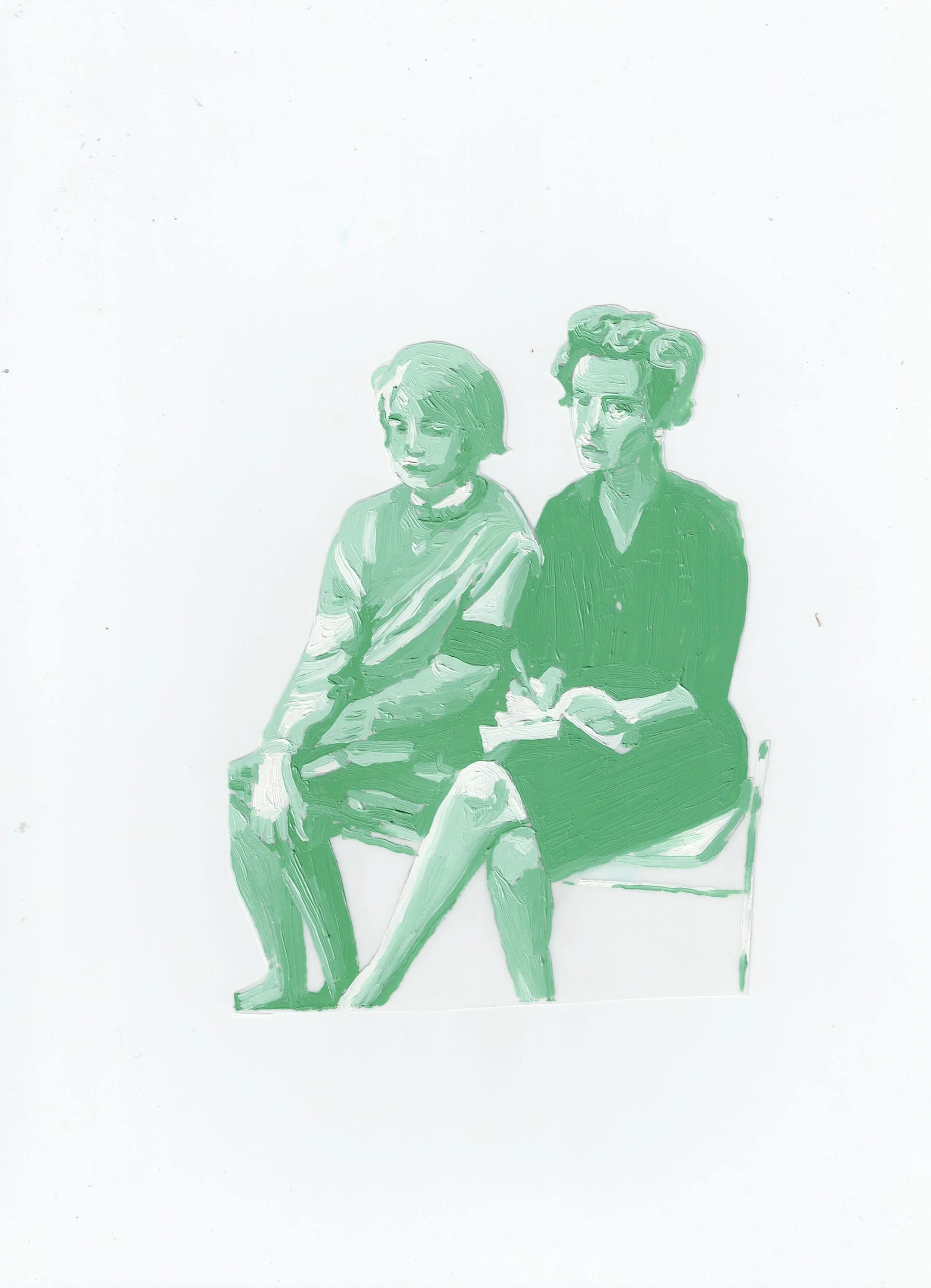
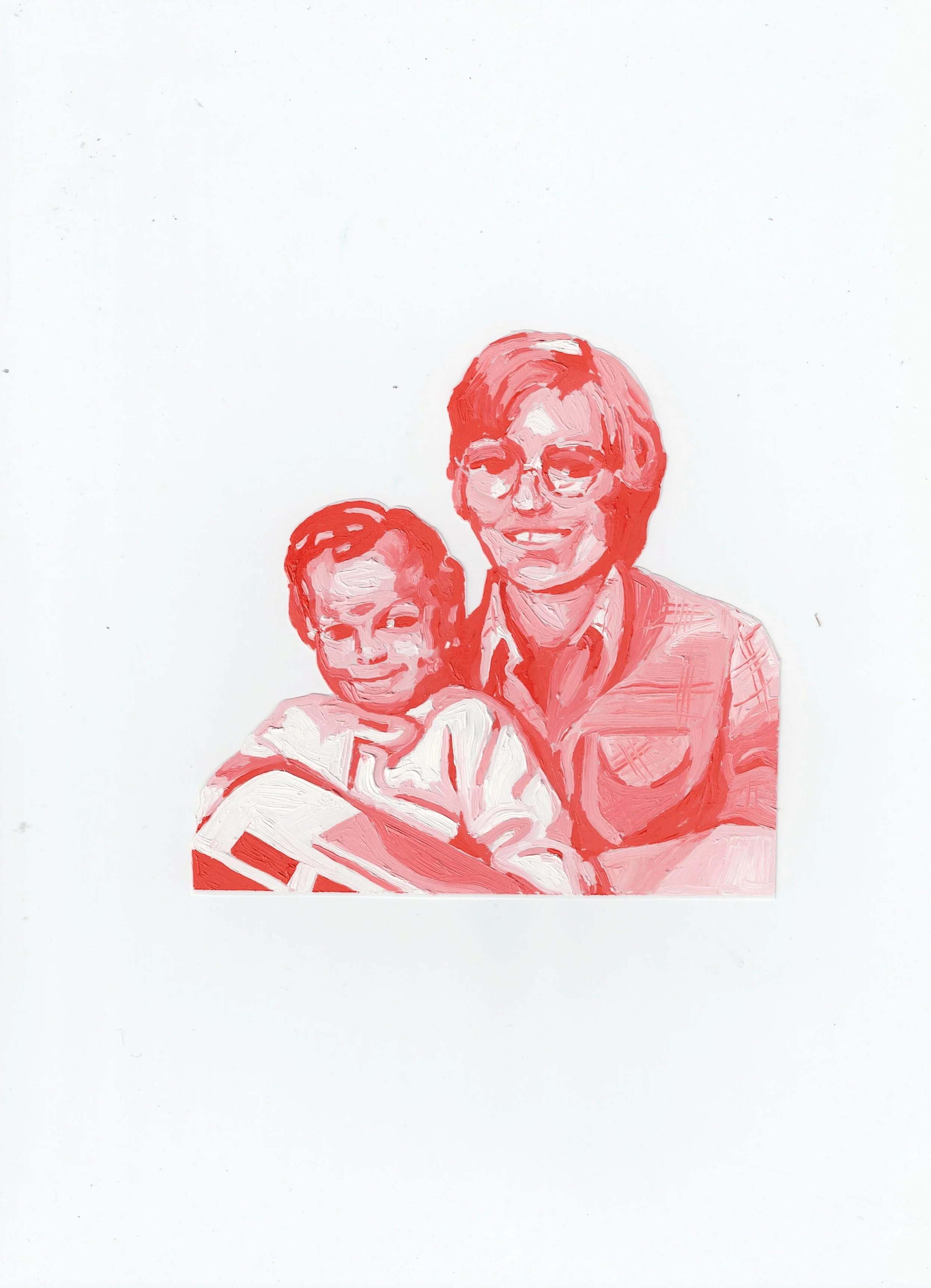
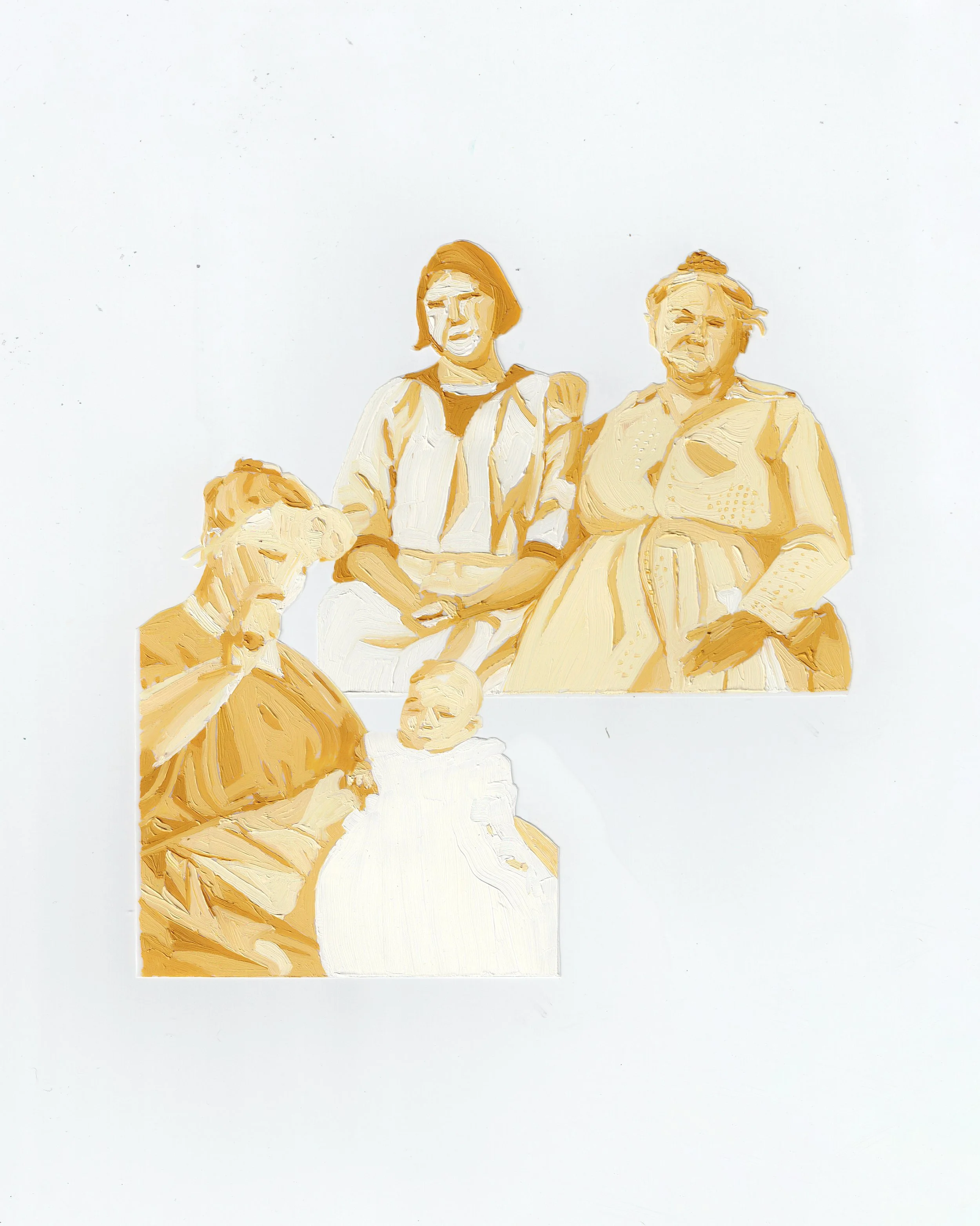
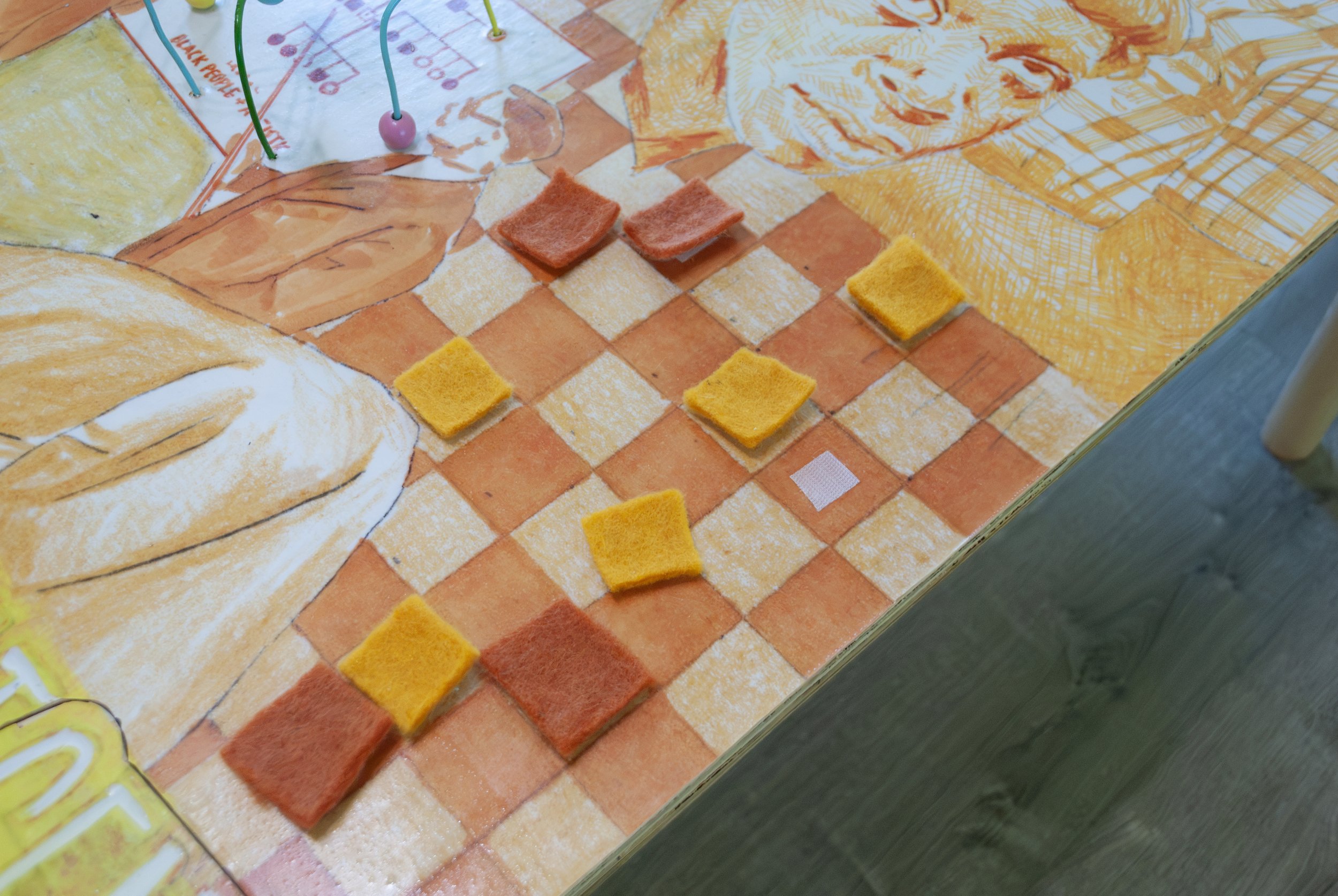
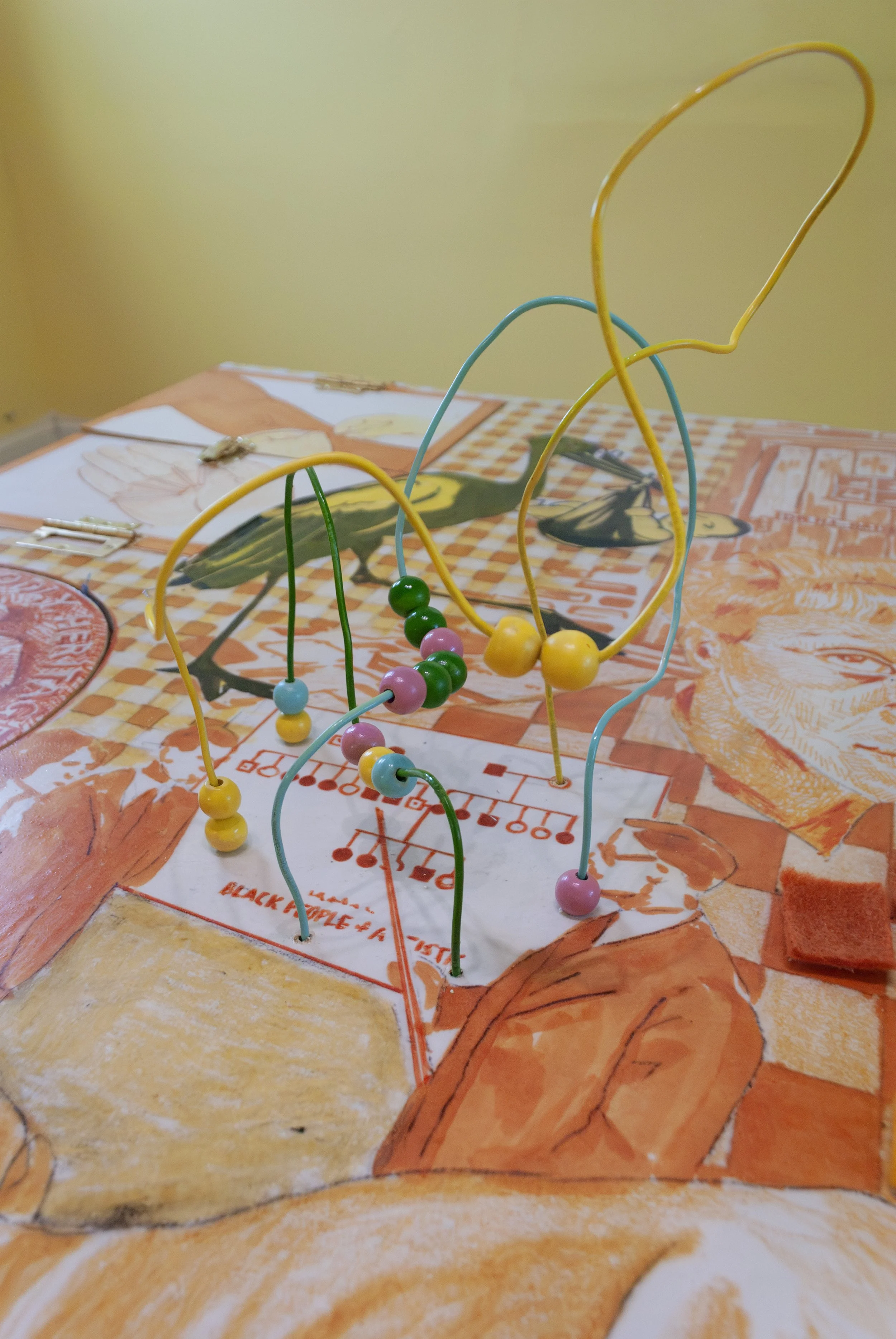
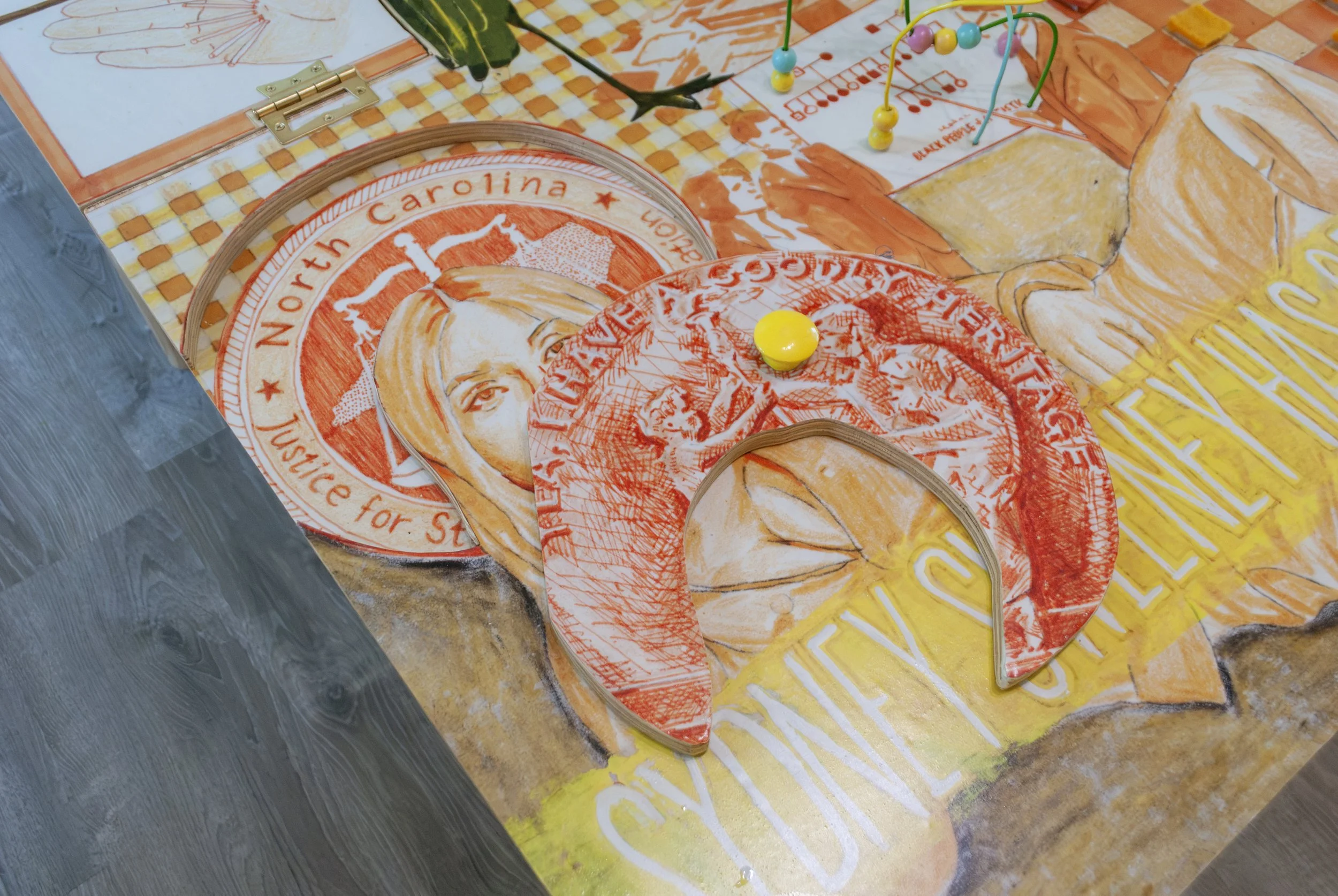
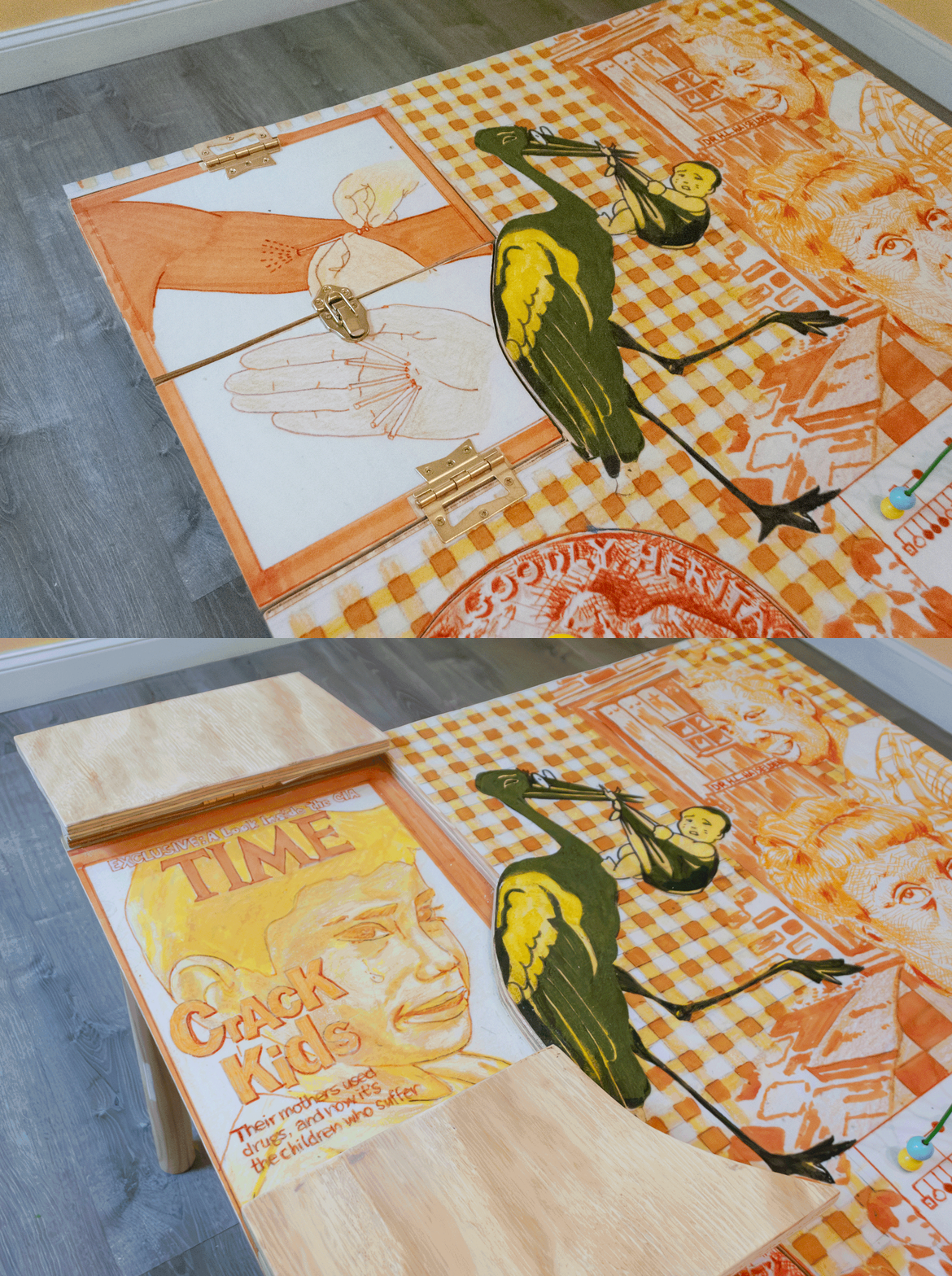
Worker Bees, commissioned by the Mennello Museum of Art as part of the City of Orlando’s Art Pollination: Building Food Justice Through Creativity project, focuses on Florida’s historical and contemporary role as the US’s “winter garden”. Agricultural production of citrus, sugarcane, tomatoes, and other fresh produce play a significant role in Florida’s economic and cultural identity. However, the farmworkers who pick these crops remain largely invisible. While labor organizers have made truly remarkable strides in Florida over the last two decades to improve working conditions for these essential workers, pay, safety, and living conditions continue to be unjust. This mural pays homage to the farmworkers of Florida and historic and contemporary advocates (several former farmworkers themselves) who have fought to improve working and living conditions and protect the rights of Florida’s farmworkers. These advocates represent a patchwork of methodologies—education, reporting, labor organizing, legal advocacy, ministry, art activism, etc.—that, when woven together, show us how food justice can be built collectively and collaboratively. Like the Everglades tomato, Floridian activists have expanded our vision of what is possible under extreme conditions, growing food justice through worker solidarity.
Citrus pattern based on Florida Citrus Commission logo
Pattern referencing Miccosukee and Seminole patchwork and United Farm Workers’ logo
Caribbean madras pattern worn by the people of Haiti, referencing migrant laborers
In 1926, Polly Mays and her husband founded South Dade’s first public school for Black children, which served the farmworker families of the area. I learned about her from Nadege Green’s public history x art project, Black Miami-Dade.
In 1959, Howard Van Smith won a Pulitzer for his reporting on the impact of a freeze that stranded agricultural workers in migrant labor camps with deplorable conditions. As a result, he was featured in Harvest of Shame, Edward R. Murrow’s 1960 documentary that brought national attention to the poverty of agricultural workers throughout the US. The 2014 documentary Food Chains picks up where Harvest of Shame left off, highlighting how Florida’s Coalition of Immokalee Workers is fighting to improve working conditions in the fields.
C&W Stockwell’s famed Martinique wallpaper, associated with South Florida
David & Dash’s, a historic Miami-based company, bamboo wallpaper reminiscent of sugarcane
Rudy Juarez was a long-time organizer of farmworkers, founding Organized Migrants in Community Action (OMICA, now Centro Campesino). In 1973, a typhoid epidemic swept through a labor camp after workers drank from a contaminated well. Rudy led relief efforts. He continued to be a leader in the fight to provide safe and affordable housing for farmworker families until his death in 2010.
Mack Lyons, a UFW member, was sent by Chavez to Florida in 1971 to unionize citrus pickers working for Minute Maid, owned by Coca-Cola. They succeeded in enlisting 75% of workers, creating a unionized, interracial coalition that resulted in a groundbreaking collective bargaining agreement. Terrell Orr’s 2019 article “Now We Work as Just One” in Southern Cultures magazine details this history.
Jamaican bandana pattern, also known as “Miss Lou” bandana, pays tribute to the migrant laborers who primarily harvest sugarcane in the Belle Glade area of Florida. The 2023 podcast Big Sugar details the exploitation of these workers by the sugar industry.
Mexican serape pattern represents the contributions of migrant laborers who travel to Florida from Mexico seasonally, as well as Mexican-American farmworkers, to our food system. Much like Jacob Lawrence’s The Migration Series illustrated the mass movement of Black families from the Southern to the Northern US, Carlos Francisco Jackson’s series of screenprints depicts the US’s Bracero Program (1942-1964), the movement of Mexican workers it initiated, and the injustice they faced.
Sister Ann Kendrick came to Apopka, Florida in 1971 with three other Catholic nuns to minister to farmworkers in the area. She went on to found Hope CommUnity Center and continues her advocacy for immigrants and all victims of oppression.
Tirso Moreno was born in Mexico and emigrated to the US at age 17, where he worked as a migrant farm laborer. He went on to cofound Farmworker Association of Florida, organizing farmworkers to secure justice and dignity in their work. Tirso is profiled in Dale Finley Slongwhite’s 2014 book Fed Up: The High Cost of Cheap Food, along with Geraldean Matthew.
Florida-based Lilly Pulitzer’s “Peeling Out” print design
Tomato pattern by designer Nickleen Mosher
Greg Schell is a Florida-based attorney who has spent his career fighting to protect the rights of Florida’s migrant farmworkers. He has served as the managing attorney for Florida Legal Services’ Migrant Farmworker Justice Project, where he filed a class-action lawsuit on behalf of bean pickers to recoup stolen wages.
Geraldean Matthew was a farmworker at Lake Apopka. After the farms in the area were shut down, she began advocating for medical study of the effects of agricultural pollution and pesticide exposure on workers and the community. She had a number of chronic health problems and passed in 2016 at age 66. Before her death, she worked with Linda Lee on the Apopka Farmworkers Memorial Quilt, inspired by the NAMES Project AIDS Memorial Quilt. Linda’s artwork served as my inspiration for the quilt-like composition of the Worker Bees mural.
Pattern reminiscent of agricultural fields
Paisley bandana pattern
Amid the #MeToo movement’s peak in 2017, Mónica Ramírez published the “Dear Sisters” letter in Time magazine, inviting solidarity between Hollywood and agricultural workers facing workplace sexual harassment. Prior to her rise to national prominence, she founded a Florida-based legal project and created The Bandana Project, which uses art activism to raise public awareness of workplace sexual violence against farmworkers.